
Insight Product Development
  • Work
    • Abbott Molecular
    • BD
    • BigBelly Solar
    • Boston Scientific AngioJet Ultra
    • CareFusion
    • ConMed Electrosurgery
    • Covidien
    • Fenwal
    • Healthy-TXT
    • Herman Miller Healthcare
    • Hill-Rom
    • ivWatch
    • Millipore
    • Olympus
    • Orison
    • PhysIQ
    • Parata Systems
    • Reliance Medical
    • Sartorius Stedim
    • Somna Therapeutics
    • St Jude Medical Wireless
    • St. Jude Medical
    • West Pharmaceutical Services
    • Xoran Technologies
  • What We Do
    • Design Strategy
    • Advanced R&D
    • Design for Commercialization
    • Navigating Connected Health
    • Design Research
    • Human Factors and Usability
    • User Experience Design
    • Engineering
  • Expertise
    • Medical Device Development
    • Drug Delivery Systems Development
    • Navigating Connected Health
  • About
    • Leadership
    • Careers
  • Insights
  • Accelerator
    • Insight Accelerator Labs
    • Application Form
    • Members
    • Providers and Partners
    • Fueling Startups
    • Angel Investor Opportunities
    • Corporate Venture Scouting
    • Growing the Chicago Health Tech Ecosystem
    • News
    • IAL Contact
  • Contact
  • Search

Archive for category: Medical Devices

3 Ingredients To The Perfect Device Development Plan
August 23, 2016/in Medical Devices /by

MedDeviceLogoSean Corrigan, Director of Engineering, and Carolyn Rose, Director of Research, discuss how to build a successful concept development framework in our latest Med Device Online article.

Med Device OnlineThe definition of what constitutes “innovation” in the medical device industry has become enigmatic in recent years. While it’s still sometimes true that cracking the technology nut can be enough to result in market success, it’s typically more nuanced than that.

To drive commercial success in a crowded market, products need to address conflicting sets of user needs while simultaneously addressing market opportunities. This results in what can be a complex puzzle — but one that must be solved, if you wish to avoid pursuing technologies that don’t directly address primary user needs, incorrectly balancing or prioritizing user needs that inform development, or producing a product that meets all the specs on paper, but is not compelling or differentiated in the market.

The challenge can be distilled into three key dimensions that, weighed against one another, allow you to craft a successful development plan for a compelling product feature set.

To learn about these three dimensions, check out the full article on Med Device Online.
Your Device Is Safe And Effective, But Is It Desirable?

July 27, 2016/in Medical Devices /by

Craig Scherer talks about the importance of desirability when trying to achieve differentiation in a crowded marketplace in his latest Med Device Online article

Your Device Is Safe And Effective, But Is It Desirable?

Over the last few years, the term human factors engineering has become permanently and inextricably linked with any discussions on effective and appropriate medical device development. Human factors are used to optimize designs to users’ capabilities while minimizing the negative consequences of their limitations.

With the adoption of the AAMI HE75 guidance, the FDA’s expectations around how to utilize effective human factors for device development has become better understood and more widely embraced. Clinicians and lay users alike have specific and significant use-related challenges that need to be addressed by device developers. The FDA’s oversight helps to ensure that devices cannot be misused in ways that can cause accidental harm. Implementing a sound human factors plan offers device companies additional benefits, like lower training and in-service costs, minimized probability of recall, and diminished frequency of liability litigation.

However, the truth is that the FDA is not concerned with your devices’ sales numbers, adoption rates, or any other indicators of market success. It exists to ensure that your device is safe and clinically effective. Looking at the bright side, though, the FDA human factors guidelines require multiple rounds of formative research, and this research, if appropriately designed, can be leveraged to create more user-centric and appropriate solutions.

Read the full article on Med Device Online.
What Do Medtech Users Really Want From IoT?

July 11, 2016/in Medical Devices /by

QMedConsider these five things to delight users and deliver meaningful value with connected devices, says Abbe Kopra of Insight Product Development.
IoT is a buzzword these days, and the opportunities for product development are extensive.

McKinsey predicts “the impact of the Internet of Things on the global economy might be as high as $6.2 trillion by 2025,” and leaders like Google, Cisco, Oracle, and Intel are banding together to support smart object technology. Our medical device clients are confronted with seemingly endless possibilities and a need to “predict” that can overwhelm. How can we integrate connectivity to deliver benefits that end users really want?

While the individual solutions and strategies we’ve developed with our clients are diverse, here are some current trends in our latest QMED article to keep in mind.

Translating User Needs Into Design Inputs

June 28, 2016/in Medical Devices /by

MedDeviceLogo

Craig Scherer talks to Med Device Online about turning research into design inputs

Design innovation consultants are asked to help clients sunderstand users holistically: Who they are, how they differ from each other, how they are influenced by their environments, and how they might change over time.
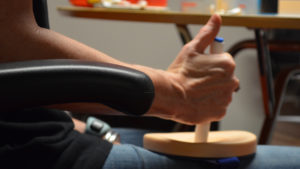
We must look to our core development process to focus around the user and all critical stakeholders. Designing optimal solutions means taking into consideration all of the influencers on the user, which might include technology strategies, market trends and opportunities, or outside influences, like regulatory and reimbursement systems.

Across medical device press, conferences, and other public forums one constantly hears organizations ask the question, “So…I have all of these user needs defined – what the heck do I do with them now?” What they really are asking is, “how do I translate user needs into specific and actionable design inputs?”

“In performing human factors evaluations, we can go beyond being simply safe and effective, drawing upon users’ needs, wants and desires to make user experiences much more meaningful and rewarding.”

Check out the full article on Med Device Online to learn how.


Innovative vs. Intuitive: 5 Ways To Ensure Novelty Doesn’t Compromise Usability

May 19, 2016/in Medical Devices /by

MedDeviceLogoAbbe Kopra, senior researcher, and Craig Scherer, senior partner and co-founder of Insight Product Development, co-author latest guest column in Med Device Online


Med Device OnlineWith today’s hyper-focus on speed to market in medical device development, we’ve seen clients get quite frustrated when a new-to-the-world design doesn’t instantly prove “intuitive” to users. Innovation can often upset the apple cart, especially in cases where new and unfamiliar technologies are utilized to enable new functionality. Importantly, this less-than-optimal user experience can hurt the product’s adoption and lead to high rates of abandonment.

These disruptions to users’ expectations may necessitate designs that help them understand the need to complete a task in a new way. In the case of new technologies, this can be a sign that we’ve identified a potentially disruptive innovation to better serve user needs in the long run.

As medical device developers trying to stand out from our competition and better support our users, how can we be sure a product isn’t just different for the sake of being different? And, if we think we have a winner, how can we introduce it in a way that best supports our target audience, setting them up for optimal usability and success?

Check out the the full article in Med Device Online to learn five suggestions for making sure that new designs create safe, effective, and desirable outcomes.

3 Key Healthcare Adoption Drivers: How They Shape Product Development

March 21, 2016/in Medical Devices /by

MedDeviceLogo

Craig Scherer, Insight Co-Founder and Senior Partner, and Carolyn Rose, Director of Research and Strategy, co-author latest Med Tech article in Med Device Online

Introducing a new product into a hospital or other healthcare system is an increasingly arduous task. Compelling, user-centered design alone doesn’t ensure a product’s successful introduction or adoption. Striking the right balance to ensure key priorities are met — across both the complex healthcare ecosystem and the larger audience of device stakeholders — could be the difference between market failure and commercial success.

In order to compete effectively in today’s healthcare marketplace, a company must recognize the adoption drivers at play and be cognizant of how its product values and infrastructure align with those drivers in the healthcare ecosystem.

Check out the full article in Med Device online to learn about these key adoption drivers.

Buy, Or Bye-Bye? How To Vet Novel Medical Device Technologies

February 4, 2016/in Medical Devices /by

MedDeviceLogo

Craig Scherer shares his thoughts on the “renaissance of American medical innovation” in his latest Med Device OnLine article

There are two key components to evaluating, evolving, and applying disruptive medtech; Technology acquisition and R&D . Check out the full article on Med Device Online to learn how this engine is now driving medical device innovation.

http://www.meddeviceonline.com/doc/buy-or-bye-bye-how-to-vet-novel-medical-device-technologies-0001

Does Disruptive Innovation Really Have to be so Disruptive?

December 8, 2015/in Medical Devices /by

QMedCraig Scherer shares his thoughts with QMED Magazine about how user-centered design can be the difference between capitalizing on disruption or succumbing to it.

Read more

Disruptive Innovation: What It Is and Why You Can’t Afford to Ignore It

October 25, 2015/in Medical Devices /by

QMed

Craig Scherer shares his thoughts on understanding how disruptive innovation and disruptive technologies affect us in the medical device development world. He also shares his ideas on how to plan for and capitalize on disruption.

Read more

Infographic: Navigating the Universe of Risk in Healthcare Solutions Development

October 16, 2015/in Medical Devices /by

MedDeviceLogoMed Device Online Magazine draws on Steve McPhilliamy’s expertise to avert costly missteps

Read more

Page 2 of 6‹1234›»

Contact


Insight Product Development
4660 N Ravenswood Ave
Chicago, IL 60640
1 773 907-9500

Explore

What We Do
Design Strategy
Advanced R&D;
Design for Commercialization
About
Leadership
Careers
Contact

Expertise
Medical Device Development
Drug Delivery Systems
Connected Health
Work
Insights
Accelerator
News and Events

Latest Tweets

  • Photo op of the @Nemera team at #PODD2019! Don’t miss our talk tonight about how we put patients first through char… https://t.co/hdzK6xUx4E

    1 week
  • Meet our startup of the week, Mistifeye, who is creating a device that converts over-the-counter eye drops into a g… https://t.co/YMOMLEvkc9

    1 month

A Design Innovation Consultancy
privacy policy | ISO 13485:2016 Certified | © 2018 Insight Product Development, LLC
Scroll to top